
SEO case study
TubeFetcher SEO Case Study: From a New Website to 133K Google Search Clicks in Three Months
How semantic SEO and consistent content publishing grew TubeFetcher’s visibility in search.
The project: building organic visibility from an early stage
When Brixle Solutions began working with TubeFetcher in late August 2025, the website was new and had limited organic search visibility. TubeFetcher offers a downloadable utility for saving supported online video and audio content, with public product information and guides available on its website.
The SEO challenge was not simply to produce more posts. A new website needed a clear subject focus, relevant answers to searchers’ questions, sound technical foundations and an ongoing process for improving its content. Brixle took responsibility for SEO research, planning and implementation, technical SEO, website structure and technical improvements, content optimization, and continuing measurement.
The challenge: what needed to change?
The site had limited search visibility at the beginning of the engagement. To develop it responsibly, Brixle needed to understand relevant searches, plan related content rather than isolated keywords, support that content with website optimization and monitor what Google Search Console actually showed.
Specific historical technical defects have not been supplied, so this case study does not invent examples such as broken canonicals or indexing errors.
Our approach: semantic SEO and topical authority
Start with research and search intent
Brixle first researched TubeFetcher’s product area, relevant user questions and search intent. This research informed which topics belonged in the content plan and how each article could address a meaningful need. The aim was to align helpful information with the questions people were asking, rather than repeat keywords without context.
Create a topical cluster map
Following the research, Brixle developed a topical cluster map to organize core subjects and supporting questions. The map provided an editorial framework so individual articles could contribute to broader, connected topical coverage. It was a planning and content-organization approach, not a claim that any single map automatically creates rankings.
Build the first 10-article foundation
The team developed an initial foundation of 10 blog posts based on the research and topical planning. This formed the starting library for the ongoing strategy. We do not attribute individual keyword rankings or gains to a specific article without a page-level analysis.
Publish consistently and expand useful coverage
After the initial content foundation, Brixle continued publishing approximately three to four blog posts each week. The publishing schedule remains active as part of the engagement. Frequency alone is not a ranking factor or a guarantee of traffic; the purpose of this process is to keep answering relevant questions, expand coverage where useful and improve content over time.
Combine content work with technical optimization
Alongside content planning and publishing, Brixle handled technical SEO, website structure, development-related improvements and ongoing optimization. These responsibilities supported the wider search strategy, but the available project notes do not specify individual fixes or before-and-after technical test results. Accordingly, we describe the confirmed work at its actual level of detail.
Review results and continue improving
The engagement includes continuing SEO reporting and optimization. Google Search Console allows the team to review clicks, impressions, average click-through rate and average position, while content work continues. These measurements show search visibility, not verified downloads, leads or revenue.
The results: early visibility versus later search performance
- Clicks
- 133K
- Impressions
- 2.48M
- Average CTR
- 5.4%
- Average position
- 9.1
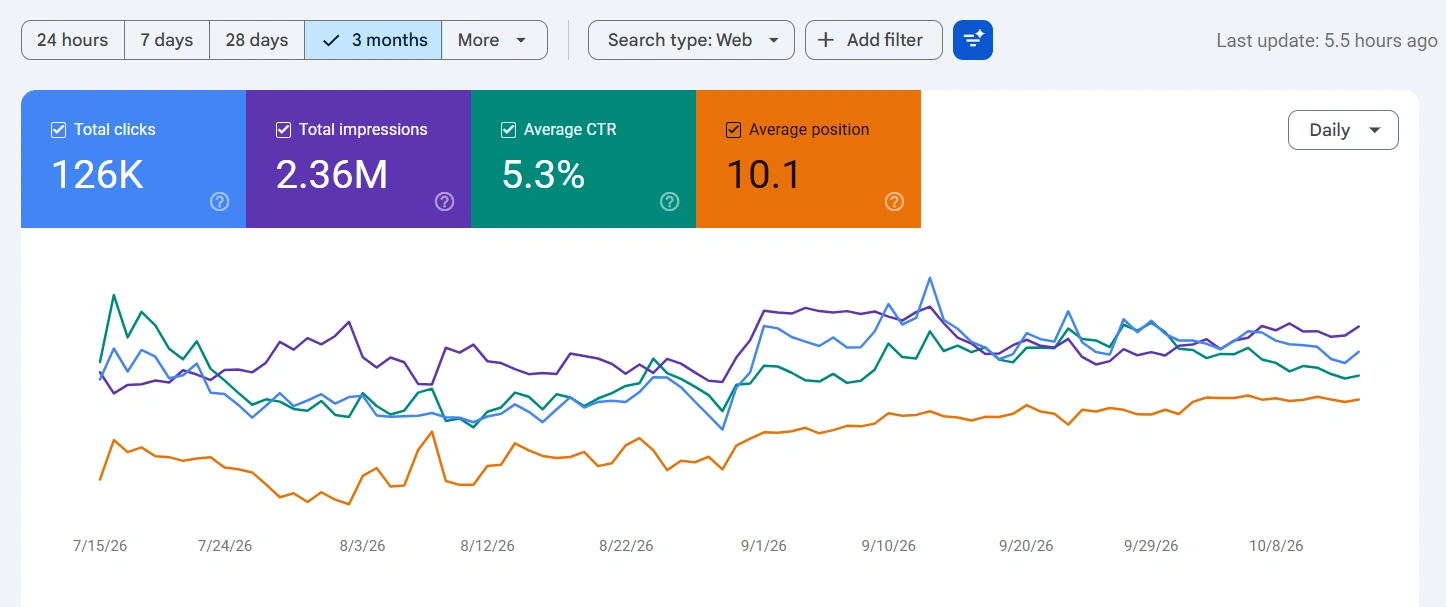
Source: TubeFetcher Google Search Console, Web search. Latest three-month reporting period shown in the supplied Google Search Console screenshot (approximately August 5–November 3, 2026). These are recorded search-performance totals, not additional clicks or a measurement of business revenue.
An early Google Search Console window of August 5–September 1, 2025 shows 19 clicks and 52 impressions. This reporting window partially predates the late-August engagement start, and should be treated as an early-visibility reference, not a perfectly isolated pre-work baseline.
The longer comparison window, September 6, 2025–November 6, 2026, shows approximately 325K clicks and 6.45M impressions. These periods differ greatly in duration, so we do not calculate or claim a like-for-like percentage increase between them.
In the latest supplied three-month view, TubeFetcher recorded approximately 133K Google Search clicks, 2.48M impressions, a 5.4% average CTR and an aggregate average position of 9.1. These figures show substantial visibility during that period. The average position does not mean every important keyword ranked ninth, nor can the screenshot isolate the contribution of each SEO activity.
Why this approach matters
TubeFetcher shows what a structured SEO engagement looks like when research comes before publishing. Brixle established a topical plan, started with a focused content base, maintained regular publication, combined content with technical work and reviewed performance over time. The available evidence documents strong later search visibility. It does not establish a controlled causal relationship between one technique and the entire result.
Questions businesses ask about this approach
Why create a topical map before publishing content?
A topical map helps identify connected questions and subjects, plan coverage and reduce the risk of publishing unrelated articles. It is useful as a planning system when paired with sound research, original information and useful page experiences.
How does semantic SEO differ from repeating keywords?
Semantic SEO considers the subject, user intent and meaningful relationships among concepts. The objective is to answer the user’s underlying need clearly, not to insert as many related terms as possible.
Does publishing three or four blogs every week guarantee SEO growth?
No. Consistent publication supports a repeatable editorial process, but rankings depend on relevance, usefulness, competition, technical accessibility and many other factors. Every additional page should serve a distinct purpose.
How do technical SEO and topical content work together?
Technical SEO helps search engines access and interpret site content; topical planning helps the content address related information needs in an organized way. Both were included in Brixle’s TubeFetcher engagement.
How should SEO results be measured?
Clicks, impressions, CTR and average position show important aspects of Google Search visibility. Businesses should also measure relevant conversions when reliable tracking exists. This case study does not claim unverified downloads, conversion improvements or revenue.
An ongoing partnership
Brixle began working with TubeFetcher in late August 2025 and the engagement remains active. The team continues publishing approximately three to four articles weekly, monitoring search results and improving the website. The client has communicated satisfaction with the work and results, but no direct testimonial quote has been provided for publication.
NEED A CLEARER SEO STRATEGY?
Need a clearer SEO strategy for your website?
Whether you’re launching a new site or improving an existing one, useful SEO starts with the questions your customers ask, a practical technical foundation and a plan for continuous improvement. Explore Brixle’s SEO and Digital Marketing services or discuss your project with our team.